Confronting the Maternal Health Crisis in Far Rockaway and Beyond
Far Rockaway, New York, December 17, 2025 — By Jacqueline Marecheau, MD, FACOG, Chairperson, Department of Obstetrics & Gynecology at Episcopal Health Services
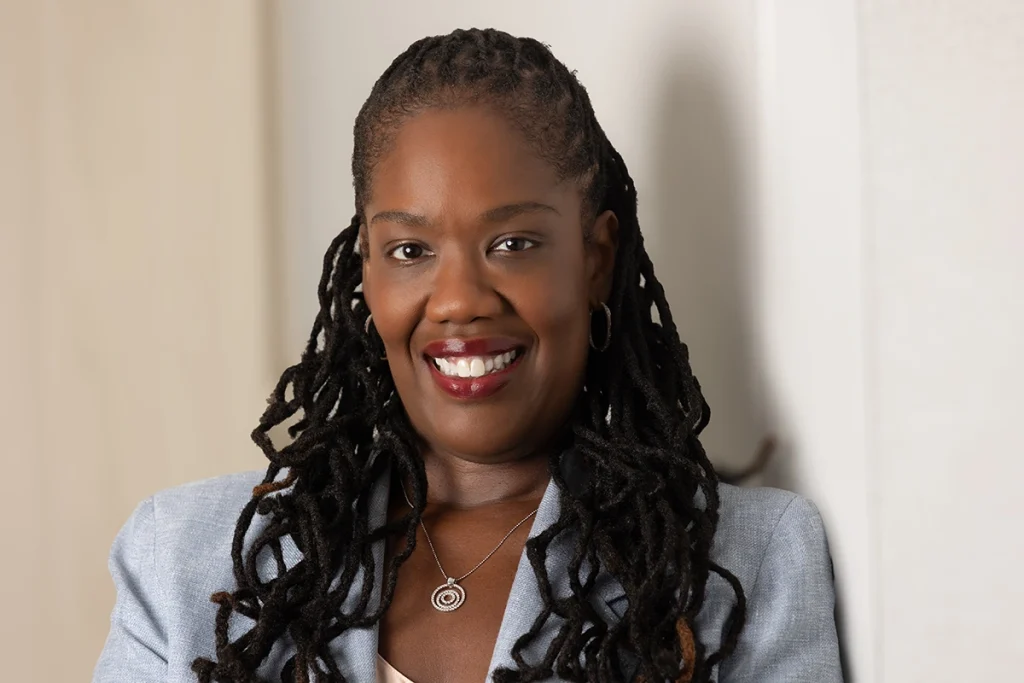
If I told you that 22 women in every 100,000 die in childbirth and about 50,000 experience a complication each year in the United States, would you believe this is occurring in our country? I never imagined I would become part of those same statistics I’ve spent my career trying to change. As an obstetrician-gynecologist, I’ve cared for thousands of women through pregnancy and childbirth. But when I developed preeclampsia, followed by postpartum depression, I experienced firsthand how vulnerable even a physician can feel in the face of a system that too often fails mothers.
Giving birth can be deadly in the United States. That reality is not just tragic – it is a national crisis. The U.S. continues to have the highest maternal mortality rate among high-income nations, and the risks are even more alarming for Black women.
Between 2018 and 2021, Black women were three to four times more likely to die from pregnancy-related causes than white women, according to data from the National Center for Health Statistics and the Centers for Disease Control and Prevention. These causes range from preeclampsia and pulmonary embolisms to mental health conditions—now the leading driver of pregnancy-related deaths.
These are not rare or unavoidable tragedies. Up to 60 percent of maternal deaths are preventable – but only when equity is incorporated into every layer of care.
This disparity persists regardless of education, income, or access to insurance. Even in New York City – home to world-class hospitals – Black women face higher maternal health risks. The driver is not biology. It is inequity.
Behind each number is a woman whose absence leaves a family forever changed. These tragedies are not inevitable. They are the results of gaps in care, delayed diagnosis, implicit bias, and lack of resources in communities that need them most.
We cannot normalize or justify these alarming numbers. And we cannot accept that in 2025 – in one of the wealthiest countries in the world – where and how you give birth in America is still determined more by race and ZIP code than science and compassion.
As Chair of Obstetrics and Gynecology at Episcopal Health Services (EHS), I have seen how these disparities play out in real time. Our neighborhood is vibrant and diverse but has long been medically underserved. I feel the weight of this crisis daily—not just in the statistics, but in the experiences of the patients we serve. Our community, like many across the country, has faced historic underinvestment, limited access to specialized care, and structural barriers to equitable care.
Still, we are determined to model what maternal-health equity can look like—both systemically and holistically.
Over the past several years, we have transformed our campus into a place where health equity is more than an idea–it’s reality.
On August 18, 2025, we opened our new state-of-the-art Labor and Delivery Suite, bringing high-quality maternity care back to this community. This luxurious space encompasses more than serene private suites with breathtaking views and modern equipment. It reflects a longstanding commitment to investing in women’s health services – and in creating a place where mothers are seen, heard, and treated with the dignity and high quality care they deserve.
Our approach centers on culturally responsive care, trauma-informed practice, mental health support, and the vital roles of doulas. We are building a care model that meets women where they are–at their holistic state of health—one that recognizes the social, emotional, and structural forces that shape outcomes.
EHS has steadily expanded and strengthened women’s services in Far Rockaway. In 2022, we opened our Margaret O. Carpenter Women’s Health Center, providing comprehensive care – from maternal-fetal medicine and doula support to mammography, urogynecology, oncology, gynecology, and bone-density imaging – under one roof. Soon, we will expand this vision even further with the opening of the Walsh Ambulatory Pavilion this fall. The Pavilion will house a comprehensive range of services, including obstetrics and gynecology, behavioral health, and a host of oncology services, ensuring no patient has to leave the Rockaway peninsula for care.
We also launched doula and postpartum programs to guide mothers through pregnancy and beyond. Our Centering Pregnancy model blends prenatal visits with group education, improving maternal-infant health, breastfeeding rates, and earning us Baby-Friendly re-designation.
Each of these investments reflects EHS’s simple belief that maternal health is not a one-time intervention. It’s a continuum of care rooted in trust, dignity, and responsiveness to the full spectrum of needs for women and families.
Far Rockaway is often Fargotten in conversations about healthcare innovation. But what we are building here shows what is possible when healthcare is centered around humanity. This work is personal for me. Even with medical training, I felt alone and afraid when complications arose in my own pregnancy. I cannot imagine navigating that experience without support or access to care. For too many women, especially women of color, that fear becomes their reality.
At EHS, we are proving that change is possible. We have invested in staff education so our nurses and physicians are equipped to recognize early warning signs of complications like preeclampsia. We’ve created systems that prioritize follow-up after discharge, when so many tragedies occur. And perhaps most importantly, we are working to restore trust between healthcare institutions and the communities we serve. Because no woman should feel that her pain is ignored, her concerns are dismissed or her life devalued.
America’s maternal-health crisis is not inevitable; it reflects our priorities and tests our will. If we truly value life, we must begin with the mothers who give it.
I am living proof that even when the path is hard, survival is possible. But survival should not be the bar we set for maternity care. Every mother deserves to thrive. At EHS, we are working every day to build that world. It’s time for America to join us.
About Episcopal Health Services
Episcopal Health Services Inc., (EHS) is a health system located on the Rockaway Peninsula in Queens, New York. The system provides emergency and ambulatory care to the densely populated, culturally and economically diverse, and medically underserved Rockaways and Five Towns populations. The system provides people of all faiths with comprehensive preventive, diagnostic treatment, and rehabilitative services, regardless of their ability to pay.