Chronic joint and soft-tissue pain can make everyday activities difficult. Many people with arthritis or inflammatory conditions continue to experience pain, even after trying medications, injections or physical therapy.
The RAPID Program (Radiation for Arthritis & Painful Inflammatory Disorders) at Episcopal Health Services (EHS), led by Mark Ashamalla, MD, Chief of Radiation Oncology, offers an innovative, nonsurgical treatment option called Low-Dose Radiation Therapy (LDRT). This therapy uses a very low dose of radiation to help reduce inflammation and relieve pain in certain joints and soft tissues.
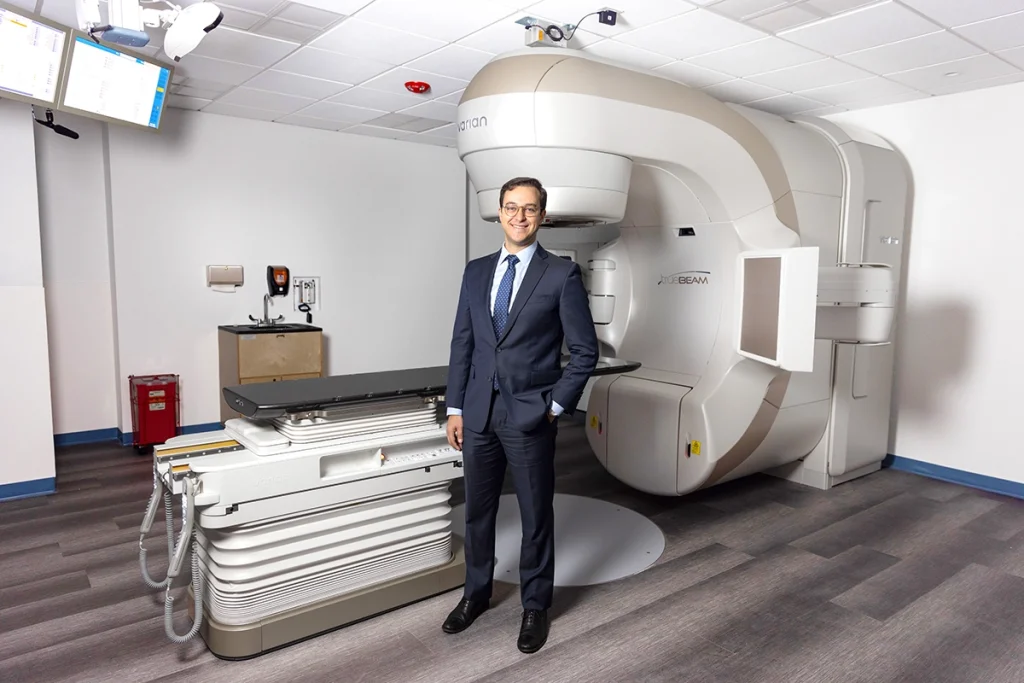
The RAPID Program is part of EHS’ Radiation Oncology services at the Walsh Ambulatory Pavilion in Queens, NY, and is designed to provide patients with another option when conservative treatments have not provided enough relief.
In The News:
What Is Low-Dose Radiation Therapy?
LDRT is an evidence-based treatment used internationally for decades to treat inflammatory conditions such as arthritis and tendon disorders. Unlike radiation used for cancer treatment, LDRT uses very low doses of radiation that work by:
- Reducing inflammation in the treated area
- Modulating immune and inflammatory responses
- Helping relieve pain and improve function
Because the dose is very low, treatments are brief and generally well tolerated.
Conditions Treated with LDRT
The RAPID Program may help patients with several painful inflammatory or degenerative conditions, including:
- Osteoarthritis (knee, hip, shoulder, elbow, hand, ankle, and other joints)
- Plantar fasciitis
- Calcific tendonitis
- Tennis elbow (lateral epicondylitis)
- Other tendon or ligament inflammation
- Dupuytren’s disease
- Keloids and hypertrophic scars
Your physician will determine whether LDRT may be appropriate for your specific condition.
Who May Benefit from the RAPID Program?
LDRT may be considered for patients who:
- Are over age 40
- Have osteoarthritis or a chronic inflammatory musculoskeletal condition
- Have not experienced sufficient relief from treatments such as
- weight loss
- physical therapy
- medications
- injections
- Are interested in a non-surgical option to manage pain
- Prefer to limit or reduce medication use
- May want to explore options before considering joint replacement or other invasive procedures
Patients should not receive LDRT if they:
- Are pregnant
- Have certain active connective tissue disorders that make radiation inappropriate
A consultation with our radiation team will help determine whether the treatment is right for you.
The Science Behind Low-Dose Radiation Therapy for Arthritis
Low-dose radiation therapy has been used for decades in Europe to treat osteoarthritis, plantar fasciitis, and other painful inflammatory conditions. Research shows that very low doses of radiation can reduce inflammation by altering immune cell signaling and cytokine activity, which may lead to meaningful pain relief and improved joint function in carefully selected patients.
Multiple clinical studies, randomized trials, and international consensus guidelines support this approach.
Selected Scientific Resources
- Martin JM, Bajaj GK, Guckenberger M, et al. Radiotherapy for Non-Malignant Diseases: An ASTRO-ESTRO-DEGRO-RANZCR White Paper. International Journal of Radiation Oncology, Biology, Physics. 2025. PubMed
- Schlamann A, Yu JB, Rühle A. Low-Dose Radiotherapy for Osteoarthritis: Current Evidence, Practical Recommendations and Future Perspectives. Seminars in Radiation Oncology. 2025;36:39-47. PubMed
- Falke I, Schäfer U, Micke O, Mücke R, Kriz J. Radiotherapy for Other Nonmalignant Diseases. Seminars in Radiation Oncology. 2025;36:127-134. PubMed
- Rogers S, Eberle B, Vogt DR, et al. Prospective Evaluation of Changes in Pain Levels, Quality of Life and Functionality After Low Dose Radiotherapy for Epicondylitis, Plantar Fasciitis, and Finger Osteoarthritis. Frontiers in Medicine. 2020;7:195. PubMed
- Canyilmaz E, Canyilmaz F, Aynaci O, et al. Prospective Randomized Comparison of the Effectiveness of Radiation Therapy and Local Steroid Injection for the Treatment of Plantar Fasciitis. International Journal of Radiation Oncology, Biology, Physics. 2015;92(3):659-66. PubMed
- Ott OJ, Niewald M, Weitmann HD, et al. DEGRO Guidelines for the Radiotherapy of Non-Malignant Disorders. Part II: Painful Degenerative Skeletal Disorders. Strahlentherapie und Onkologie. 2015;191(1):1-6. PubMed
What to Expect During Treatment
LDRT is simple and convenient. Typical treatment includes:
- Consultation and evaluation with a radiation oncologist
- Treatment planning, which may include imaging to precisely target the painful area
- Short treatment sessions, usually delivered over several visits (approximately 6).
Each treatment session typically lasts only a few minutes, and patients can return to normal activities immediately afterward.
Safety of Low-Dose Radiation Therapy
The radiation doses used in this treatment are much lower than those used in cancer therapy. Because the dose is small and targeted to the affected area:
- Treatments are generally well tolerated
- Side effects are rare
- There is no recovery time required after sessions
Your EHS care team will review the potential benefits and risks during your consultation.
A New Option for Chronic Pain
The RAPID Program expands the range of nonsurgical treatments available for patients with chronic joint and inflammatory pain. By using existing radiation therapy technology in a new way, the program provides patients with an innovative approach to pain relief when other treatments have not worked.
Request a Consultation
If you are experiencing chronic joint pain or inflammation and would like to learn whether LDRT may help, talk with your physician or request a consultation with the RAPID Program at EHS by calling 718-869-7101.